
Easy Sourdough Bread Recipe You Can Master Today
I’ve got a crunchy secret to share: sourdough doesn’t have to be intimidating. This Easy Sourdough Bread recipe is all about simple steps, a forgiving vibe, and that ta
gy crust that makes your kitchen smell like a bakery fantasy—minus the vacation from your couch.
Yes, you can pull off sourdough without turning your life into a science project. Let’s bake.
Easy Sourdough Bread Recipe You Can Master Today
Ingredients
- 100 g Active sourdough starter
- 320 ml Warm water,
- 500 g Bread flour
- 10 g Salt
- Optional: a little olive oil or butter for brushing the loaf
Instructions
- Feed your starter a few hours before you bake, so it’s bubbly and awake. If you’re starting from scratch, you’ll need to build a starter first—but this recipe assumes you have one.
- In a large bowl, whisk together starter and warm water until it looks a bit milky and alive. Add flour and mix until you have shaggy dough. No need to be perfect—texture matters more than exact measurements here.
- Let the dough rest for 30 minutes. This is called autolyse, and yes, it sounds fancy. It gives the flour a chance to soak up water and makes the dough easier to shape.
- Sprinkle in salt and knead briefly until the dough smooths out. Yo
Why This Recipe is Awesome
This recipe is awesome because it fits into real life: no scary starter rituals, no 12-hour overnight marathons, just smart, simple steps.
It’s idiot-proof, even I didn’t mess it up. It yields a crusty-on-the-outside, chewy-on-the-inside loaf that makes you look like a bread wizard at every dinner.
And if you’ve ever burned toast, you’ll appreciate how forgiving this dough can be.
Ingredients You’ll Need
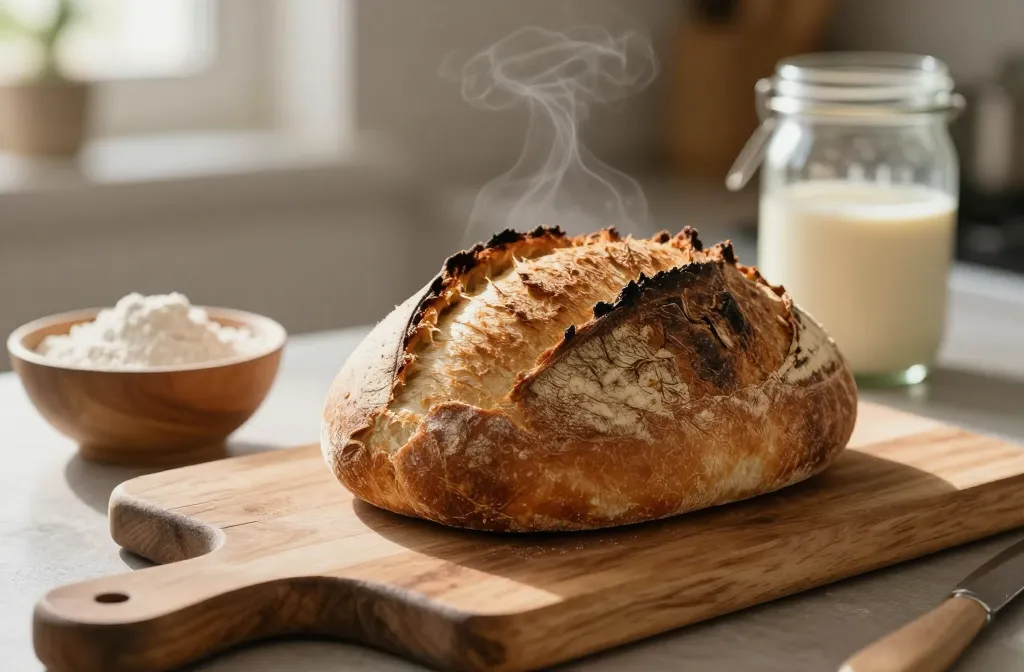
- Active sourdough starter, 100 g
- Warm water, 320 ml
- Bread flour, 500 g
- Salt, 10 g
- Optional: a little olive oil or butter for brushing the loaf
Step-by-Step Instructions
- Feed your starter a few hours before you bake, so it’s bubbly and awake. If you’re starting from scratch, you’ll need to build a starter first—but this recipe assumes you have one.
- In a large bowl, whisk together starter and warm water until it looks a bit milky and alive. Add flour and mix until you have shaggy dough. No need to be perfect—texture matters more than exact measurements here.
- Let the dough rest for 30 minutes. This is called autolyse, and yes, it sounds fancy. It gives the flour a chance to soak up water and makes the dough easier to shape.
- Sprinkle in salt and knead briefly until the dough smooths out. You don’t need a six-pack of gluten development; just a few folds will do.
- Cover and bulk ferment at room temperature until the dough doubles in size, usually 3–4 hours depending on your kitchen temp. If it happens faster, great; if not, no big deal—this bread is forgiving.
- Turn the dough onto a floured surface, shape into a loaf, and place into a well-floured proofing basket or a bowl lined with a floured towel. Don’t overwork it—you’re going for a nice round loaf, not sculpture.
- Let it rise again for 1–2 hours, or overnight in the fridge if you’re planning ahead. Cold fermentation adds flavor and makes planning easier.
- Preheat your oven to 450°F (230°C) with a Dutch oven inside if you have one. This creates that hot, steamy environment our bread wants.
- Score the dough with a sharp knife or lame. A shallow cut helps it expand gracefully rather than explode in the crust department.
- Bake 20 minutes with the lid on (or covered with a bowl), then 15–20 minutes with the lid off to develop a deep, crusty finish. Tap the bottom—if it sounds hollow, you’re done.
How to Serve
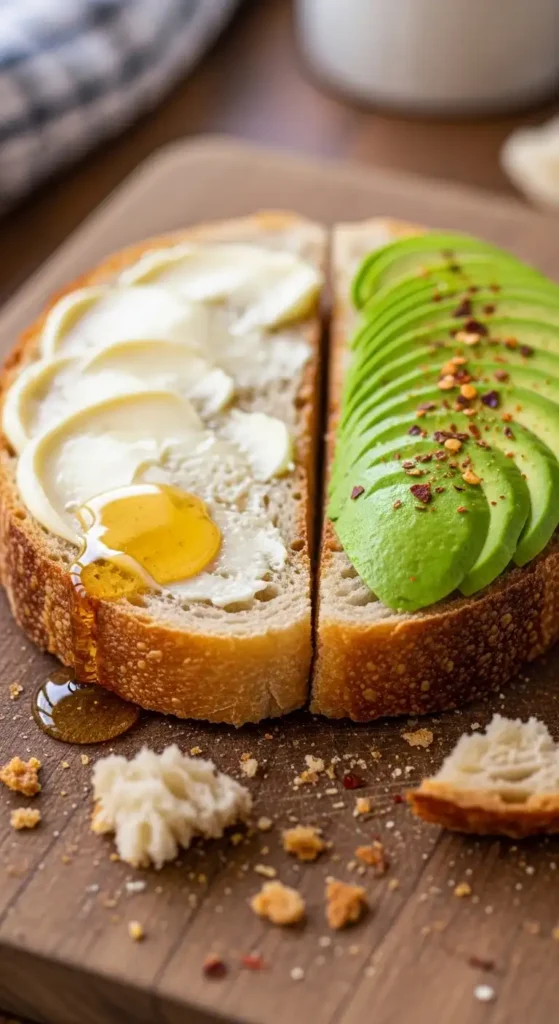
– Slice thickly and slather with butter, honey, or creamy avocado. You’re basically setting yourself up for a tiny bread-centered celebration.
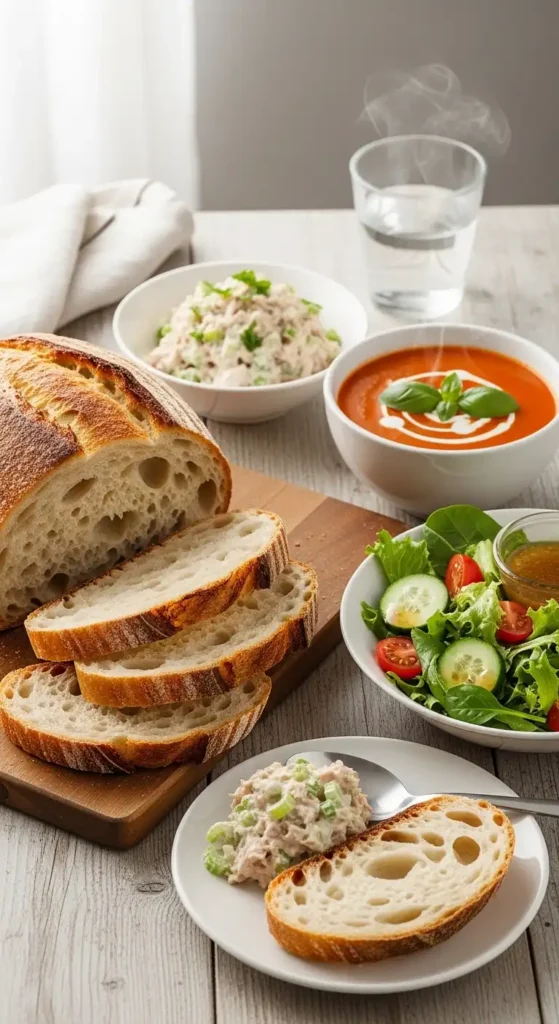
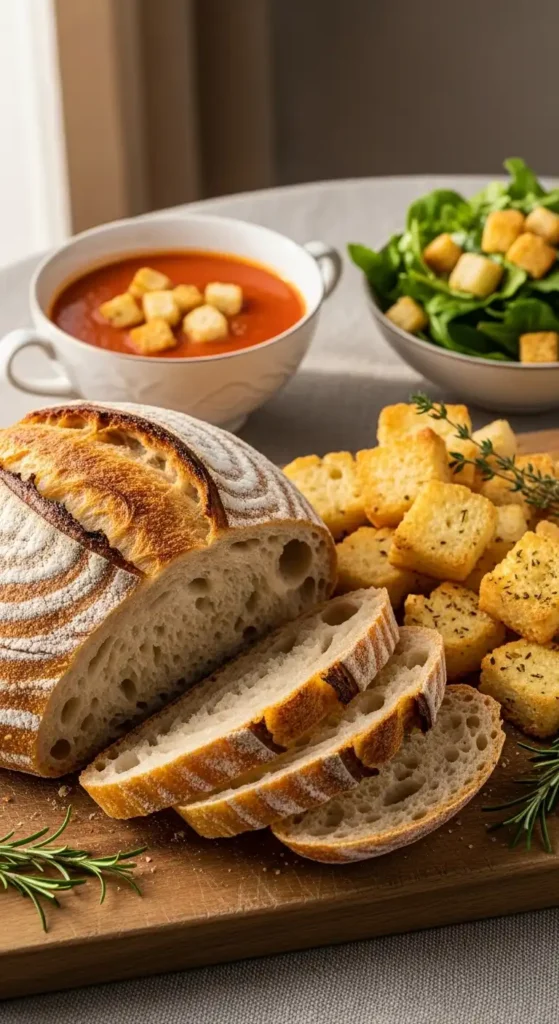
– Pair with a simple tuna salad, tomato soup, or a crisp green salad for a light, satisfying meal.
– Turn leftovers into croutons for soups or salads—double duty, double delicious.
– For a fancy touch, toast slices, smear with ricotta, drizzle olive oil, and sprinkle flaky salt and pepper. Fancy, but still easy.
– Fancy occasions? Serve with a drizzle of olive oil and balsamic, a handful of olives, and a sprinkle of herbs. It’s a simple charcuterie-approved moment without the drama.
Approximate Nutrition Facts per Serving
Per serving (approximate, because we live in reality):
– Calories: 210–260
– Carbohydrates: 40–45 g
– Protein: 7–9 g
– Fat: 2–4 g
– Fiber: 2–3 g
– Sugar: 1–2 g
Note: These numbers vary a bit based on loaf size and exact ingredients. Not a diet plan, just a guide so you don’t starve during the bread quest.
Common Mistakes
– Thinking you don’t need to preheat the oven—rookie mistake. A hot oven is bread’s best friend.
– Overkneading. Knead just enough to smooth; you’re not kneading pizza dough for a marathon.
– Under-seasoning the dough. Salt isn’t a cruel prank; it brings flavor and makes the crust crispier.
– Skipping the scoring step. Without a proper cut, the loaf can crack in unhealthy, unintended ways.
– Opening the oven too early. Let steam do its magic; you’ll regret it if you peek too soon.
– Letting the dough dry out. Keep it covered when you’re not shaping or resting it.
Simple Substitutions and Variations
– Gluten-free option: sourdough isn’t easy to replicate gluten-free; try a dedicated gluten-free starter instead and be prepared for different results. If you must, use a gluten-free flour blend with xanthan gum and embrace a denser loaf.
– Whole-wheat swap: replace up to 100 g of bread flour with whole wheat for a nuttier flavor. Expect a denser crumb, but still delicious.
– Olive oil or butter: a tiny splash in the dough can add tenderness and flavor, especially if you’re serving with a spread.
– Add-ins: dried herbs, sesame seeds, or toasted garlic powder can elevate the crust—just don’t overload the dough so it doesn’t rise properly.
Conclusion
There you have it: a straightforward, tasty sourdough loaf that fits into real life without turning you into a pastry monk.
Easy, forgiving, and deeply satisfying—the kind of bread that makes you smile every time you tear off a crusty corner.
Bake with confidence, share with friends, and savor that warm, yeasty goodness.
Frequently Asked Questions
Do I need a starter to make this bread?
If you already have an active starter, great. If not, you can start one in a week or borrow some from a friend. The key is feeding it until it’s bubbly and awake before you bake.
Is it okay to bake in a regular loaf pan instead of a Dutch oven?
Yes, but the texture will differ. A Dutch oven traps steam and helps a crisp crust. If you don’t have one, use a covered heatproof pot or bake on a preheated stone with steam in the oven (a tray of hot water on the rack below works).
How do I know when the loaf is fully baked?
Tap the bottom of the loaf; it should sound hollow. If you’re unsure, use an instant-read thermometer—the internal temp should be around 210–220°F (99–105°C).
Can I freeze the bread?
Yes. Let it cool completely, slice if you like, then wrap tightly and freeze. Reheat slices in a toaster or warm loaf briefly in the oven for a quick snack.
Why did my loaf come out dense?
Common culprits: not enough fermentation time, over-kneading, or too little hydration. Try longer bulk fermentation, gentle folds, and ensuring you’ve got enough water in the dough to keep it extensible.
What’s the best flour to use?
Bread flour is ideal because it has more gluten, giving a better rise and chew. You can experiment with a bit of whole wheat for flavor, but don’t replace all the flour.


